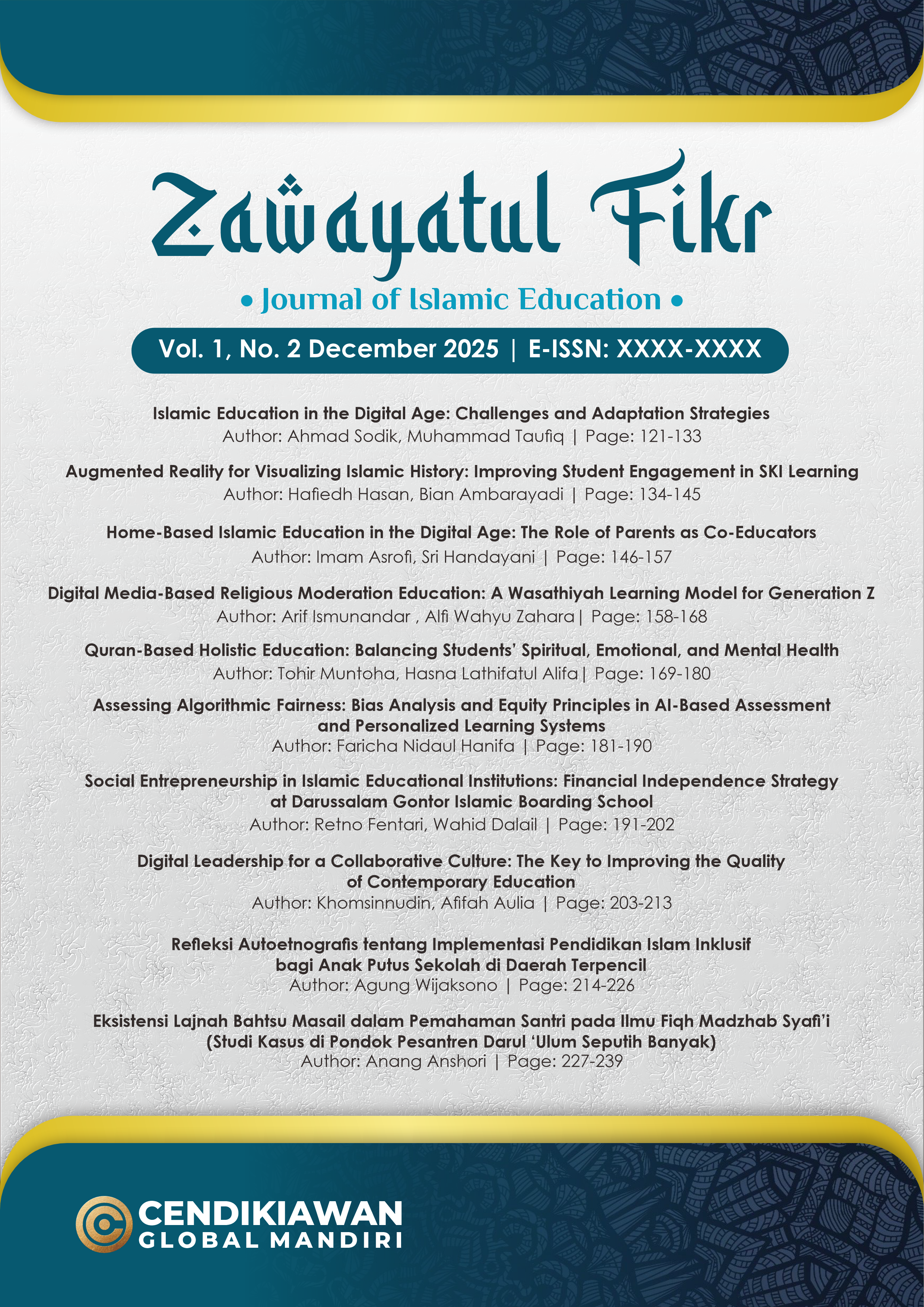
Islamic Education in the Digital Age: Challenges and Adaptation Strategies
Keywords:
Islamic education, digitization, technology adaptation, value-based curriculumAbstract
Islamic education in the digital age has undergone major changes with the introduction of technology into the teaching and learning process, but it has also given rise to problems such as unequal access to devices and the internet, low digital literacy among some educators, and the use of unverified online teaching materials. This study aims to explore these challenges and formulate adaptation strategies to maintain the relevance and quality of education using a descriptive-analytical library research method using a descriptive-analytical approach conducted systematically through literature searches in scientific databases (e.g., Google Scholar, DOAJ, ERIC, Garuda/SINTA) using keywords related to the digitization of Islamic education, followed by the selection of sources based on relevance, recency (mainly within the last 10 years), academic credibility (peer-reviewed journal articles, scientific books/book chapters, proceedings, theses/dissertations), as well as supporting policy documents and official institutional reports. This was followed by an evaluation of source quality (publisher reputation, clarity of methods, consistency of findings, traceability of references) and thematic content analysis to map issues of access, educator competence, value-based curriculum, and the collaboration ecosystem. the results of the study show that digitization opens up opportunities to improve accessibility and variety of teaching media, but requires the strengthening of an adaptive curriculum based on Islamic values, improving teachers' digital literacy competencies (platform selection, learning design, source verification, digital ethics), and collaboration between schools, parents, and the community so that digital learning does not run “alone”; Therefore, it is recommended that there be continuous training for educators, integration of religious values in technology-based learning, and equitable access to technology in all regions.
References
Agista, W. (2025). Transformasi pendidikan menuju efisiensi dan kesetaraan melalui pemanfaatan teknologi informasi Indonesia. Action Research Journal Indonesia (ARJI), 7(2), 456–482. https://doi.org/10.61227/arji.v7i2.353
Alfyn, M. A., Rohbiah, & Cahyadi, A. (2025). Mobile Learning, Virtual Learning Metaverse dan Artificial Intelligence (AI) dalam Pembelajaran PAI. Jurnal Teknologi Pendidikan (JTekpend), 5(1). https://doi.org/10.37304/jtekpend.v5i1.18309
Aulia, A., & Yuliyanti, Y. (2024). The strategic role of Islamic education management in integrating Islamic value-based character education in the digital and technology era. IJoIS: Indonesian Journal of Islamic Studies, 5(2), 13–18. https://doi.org/10.59525/ijois.v5i2.548
Hamilaturroyya, H., & Adibah, I. Z. (2025). Dinamika pengembangan kurikulum di era digital dalam menjawab kesenjangan konsep dan praktik. LEARNING: Jurnal Inovasi Penelitian Pendidikan Dan Pembelajaran, 5(3), 1245–1259. https://doi.org/10.51878/learning.v5i3.6631
Inayah, M. F. N., Haque, F. A., Lizwan, N. S., & Callista, N. A. (2025). Digitalisasi pembelajaran Pendidikan Islam: Tinjauan pustaka sistematis pengaruh teknologi terhadap pembelajaran. Jitera, 2(2), 251–262. https://doi.org/10.69673/c8ddk484
Izzah, N., Nuraini, S. H., Abyan, S., Syafi’i, I., & Ariyanti, W. D. (2025). Tantangan dan strategi kompetensi guru Pendidikan Islam dan adaptasi teknologi dalam penguatan nilai spiritual. DIKSI: Jurnal Kajian Pendidikan Dan Sosial, 6(2), 114–121. https://doi.org/10.53299/diksi.v6i2.1567
Khasanah, M. (2024). Tantangan penerapan teknologi digital dalam pendidikan Islam: Memanfaatkan inovasi untuk meningkatkan mutu pembelajaran. Leader: Jurnal Manajemen Pendidikan Islam, 2(2), 282–289. https://doi.org/10.32939/ljmpi.v2i2.4240
Khofifah, K. (2024). Peran teknologi dalam meningkatkan efektivitas pembelajaran Pendidikan Islam. Jurnal Pendidikan Islam Al-Affan, 4(2), 218–223. https://doi.org/10.69775/jpia.v4i2.215
Lukman, I. R., Unaida, R., Siraj, S., Kinanti, W., & Khairunnisa, D. (2024). Pelatihan Pengembangan Video Pembelajaran Untuk Meningkatkan Efektifitas Dalam Pembelajaran. Jurnal Pengabdian Sosial, 2(2), 2617–2622. https://doi.org/10.59837/8zmj0m20
Munawir, M., Salsabila, W., & Sudibyo, I. B. J. (2024). Analisis Pendidikan Agama Islam melalui pendekatan studi literatur terkini: Pemahaman mendalam untuk peningkatan kualitas pembelajaran. Jurnal Basicedu, 8(2), 1156–1167. https://doi.org/10.31004/basicedu.v8i2.7282
Muslim, M. (2024). Internalizing digital technology in Islamic education. Scaffolding: Jurnal Pendidikan Islam Dan Multikulturalisme, 6(3), 180–197. https://doi.org/10.37680/scaffolding.v6i3.6309
Neliwati, N. (2024). Manajemen kurikulum pembelajaran Pendidikan Agama Islam di era digital. MODELING: Jurnal Program Studi PGMI, 11(2), 246–253. https://doi.org/10.69896/modeling.v11i2.2408
Nijo, I., Erwin, Al Awwaby, M. S., & Wirawan, R. (2024). Adaptation of Islamic religious education learning through digital technology for grade 12 students at SMK Muhammadiyah Sintang. At Turots: Jurnal Pendidikan Islam, 6(2), 616–628. https://doi.org/10.51468/jpi.v6i2.766
Rahayu, S., Nabila, K., Ulandari, E. F., & Mukmin, M. (2025). Model strategi pembelajaran PAI era Revolusi Industri 4.0 dan Society 5.0. Journal of Instructional and Development Researches, 5(1), 97–105. https://doi.org/10.53621/jider.v5i1.491
Sihotang, D. S. B., & Ameylia, P. (2024). Pengembangan modul interaktif untuk kurikulum Pendidikan Agama Islam berbasis digital. Mesada: Journal of Innovative Research, 1(2), 193–201. https://doi.org/10.61253/mp2j1b86
Suwahyu, I. (2024). Peran inovasi teknologi dalam transformasi pendidikan Islam di era digital. Referensi Islamika: Jurnal Studi Islam, 2(2), 28–41. https://doi.org/10.61220/ri.v2i2.003
Taufik, M. (2020). Strategic role of Islamic religious education in strengthening character education in the era of Industrial Revolution 4.0. Jurnal Ilmiah Islam Futura, 20(1), 86–104. https://doi.org/10.22373/jiif.v20i1.5797
Downloads
Published
Issue
Section
License
Copyright (c) 2025 Zawayatul Fikr: Journal of Islamic Education

This work is licensed under a Creative Commons Attribution-ShareAlike 4.0 International License.